10 Best Labels for Business to Enhance Your Branding and Organization?
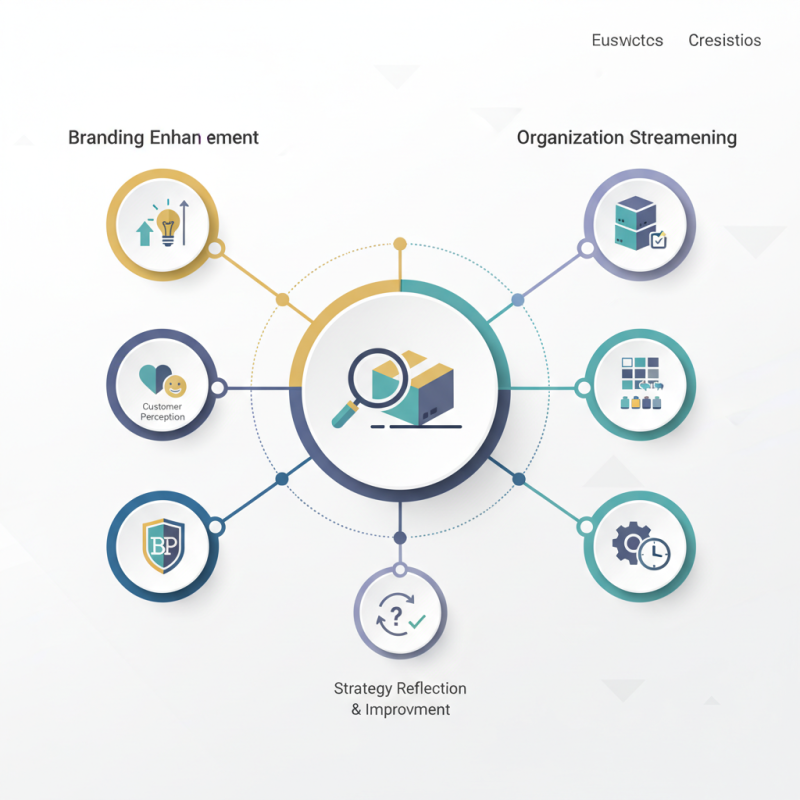
In the competitive landscape of modern business, effective branding is crucial. Labels for business play a vital role in this process. They do more than just convey information; they communicate your brand’s identity and values. High-quality labels can enhance product visibility and customer perception.
Choosing the right labels can be daunting. With so many options available, it's easy to feel overwhelmed. Some businesses might overlook the subtle importance of labels, focusing more on the product. However, a well-designed label can attract attention and create a lasting impression.
Incorporating labels for business can streamline organization as well. They help in categorizing products, ensuring a tidy inventory. A cluttered workspace can lead to confusion and inefficiency. In contrast, clear labeling promotes order and professionalism. Reflecting on your current labeling strategy may reveal areas for improvement.
Top Characteristics of Effective Business Labels for Branding
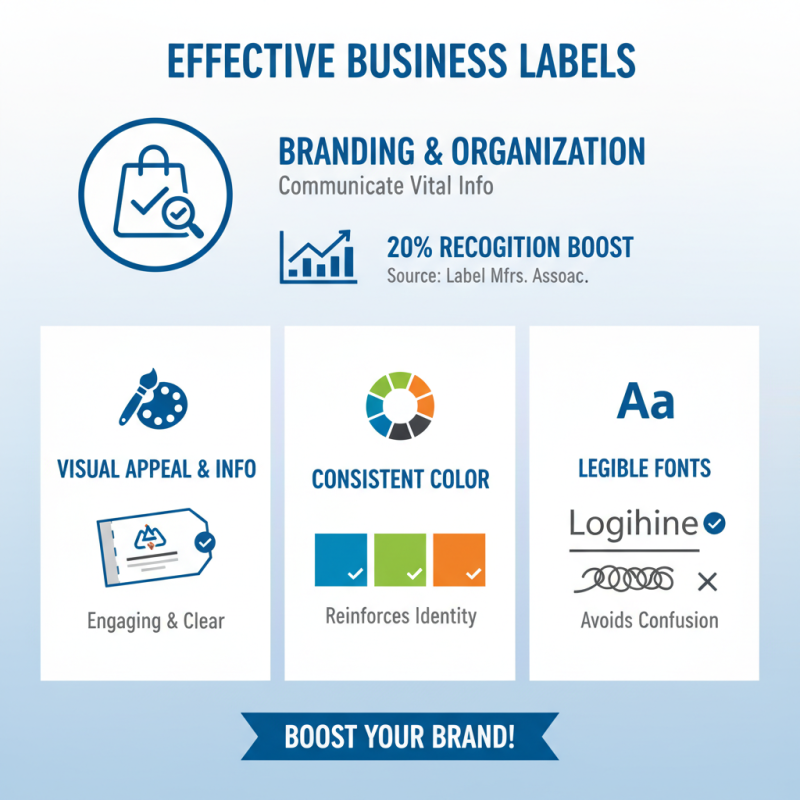
Effective business labels play a crucial role in enhancing branding and organization. They communicate vital information at a glance. A study by the Label Manufacturers Association found that brands with clear labeling experience a 20% increase in recognition. Labels should be visually appealing yet informative. Consistent color schemes help reinforce brand identity. Additionally, fonts need to be legible. Overly complicated designs can confuse consumers.
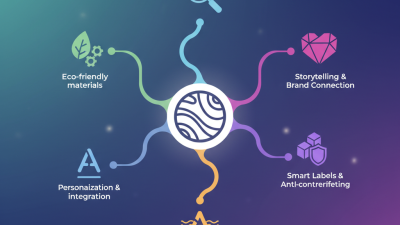
Incorporating eco-friendly materials can also be a game changer. Research indicates that 73% of consumers are willing to pay more for sustainable products. Think about using recycled paper or biodegradable materials for labels. However, not all companies prioritize this. There’s a risk in choosing cost over sustainability. This can lead to lost sales and a tarnished reputation.
It's important to consider the practical aspects too. Durable labels withstand various conditions, from moisture to abrasion. Yet many businesses overlook the need for quality. Labels that peel or fade reflect poor attention to detail. This undermines consumer trust. Balancing aesthetics and functionality should be a priority in label design.
Popular Label Materials and Their Impact on Branding and Organization
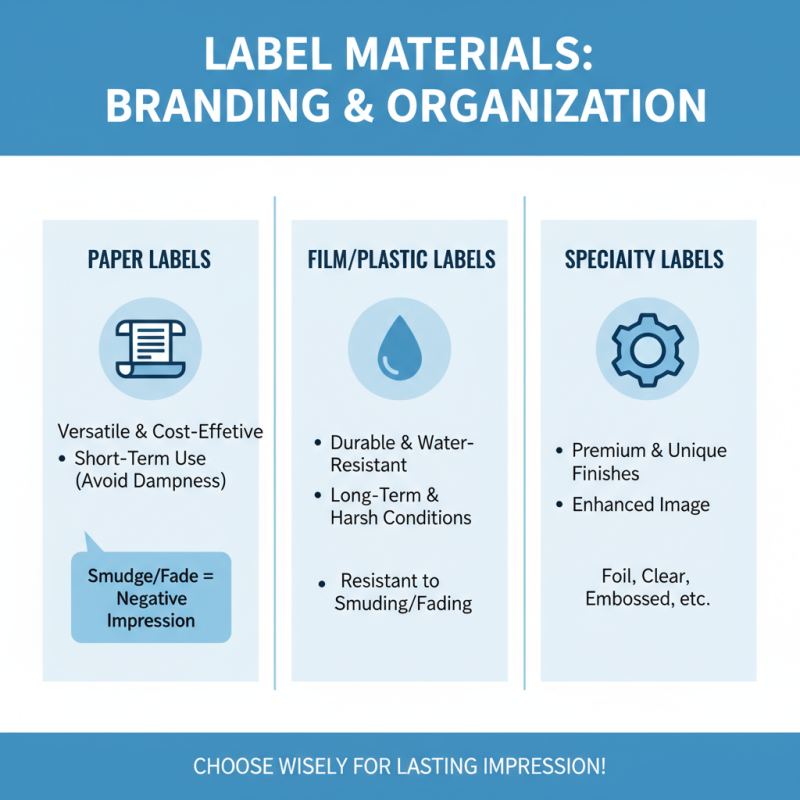
Choosing the right label materials can greatly impact your branding and organization. Each type has unique features that can enhance your business image. For example, paper labels are versatile and cost-effective. They work well for short-term use but may not hold up in damp conditions. Customers notice when labels smudge or fade. That can lead to negative impressions.
On the other hand, plastic labels are durable and waterproof. They withstand extreme temperatures and humidity. This makes them ideal for products used outdoors or in kitchens. However, they can look less natural and feel less eco-friendly. Some businesses struggle with finding the balance between aesthetics and functionality.
Metal labels offer a premium feel. They can add a touch of elegance to any product. Yet, they may be too expensive for many companies, especially startups. Consider the perception versus the cost. Reflecting on your brand’s identity is crucial. Will the label represent your values? Choosing wisely ensures your labels enhance your brand without causing logistical nightmares.
How Customization Can Enhance Brand Recognition and Professionalism
Customization plays a crucial role in enhancing brand recognition and professionalism. By creating unique labels, businesses can communicate their identity better. Consider the color scheme and font style used in branding. These elements should resonate with target audiences. A mismatched color can create confusion, while a well-coordinated palette can evoke the desired emotions. Selecting appropriate materials also matters. Matte, glossy, or textured finishes can influence perceptions about quality.
Customized labels can also serve as a storytelling tool. When labels include logos or taglines, they contribute to a cohesive brand narrative. This helps customers connect with the brand on a personal level. Customers often recall experiences tied to strong visuals. However, businesses should avoid clutter, as too much information can overwhelm potential buyers. Instead, focus on key messages and essential details.
Despite these benefits, many brands overlook the importance of label design. Some stick to generic templates, losing their unique touch. This can lead to a lack of differentiation in a crowded market. Reflecting on what makes a brand special is essential. Investing time in understanding customer preferences can lead to better label choices. Embrace the chance to experiment with various styles to discover what works best for your brand identity.
Tips for Choosing the Right Label Size and Shape for Your Products
Choosing the right label size and shape is crucial for product branding. A well-sized label can enhance visibility. It makes your product stand out. Yet, many businesses struggle with label sizing. In fact, 40% of products miss the mark due to poor label design. Labels that are too large can overwhelm. Conversely, those too small may go unnoticed.
When selecting shapes, think about your product. According to a recent study, 75% of consumers judge products by their labels. Unique shapes can capture attention. A circular label may suggest fun. A rectangular label often feels professional. However, the wrong choice can confuse potential buyers. Test different shapes with your audience. Gather feedback before making a final decision.
Don’t overlook the material as well. The type of paper or finish can influence perception. Glossy finishes may attract, but matte textures often feel more sophisticated. Reflect on how your target market views your brand. Experimenting with labels is a refining process. Expect to learn from each design trial. It's okay to miss the mark sometimes. Growth comes from these experiences.
Top 10 Label Types for Business Branding
The Importance of Consistent Branding Across All Label Designs
Branding is more than just a logo; it extends to every piece of communication. Labels play a pivotal role in this. They tell your story even before a customer engages with your product. A consistent label design creates a unified appearance. This harmony can significantly enhance your brand’s identity.
Imagine a customer in a crowded store. They spot several products, but only one stands out. Its label is not just attractive but also mirrors the brand's essence. Colors, fonts, and imagery are all aligned, creating a clear message. However, many businesses overlook the importance of consistency. They might change designs too frequently. This can confuse customers and weaken brand loyalty.
It’s crucial to reflect on your label designs regularly. Are they still aligned with your brand values? Do they resonate with your target audience? Testing different styles can lead to diverse insights. Sometimes, simplicity is more effective. Balancing creativity with clarity can be challenging. Taking time to reassess your labels can reveal gaps. It allows brands to authentically connect with their audience through a consistent visual experience.